Teaching youth soccer players proper positioning is one of the most challenging yet crucial aspects of player development. Unlike adult players who can grasp abstract concepts quickly, young players need visual, hands-on learning experiences to understand spatial relationships on the field. This is where effective coaching tools and systematic approaches make all the difference.
The Challenge of Teaching Positioning to Young Players
Youth players naturally gravitate toward the ball, creating the infamous “beehive” or “magnet ball” effect. While this enthusiasm is wonderful, it limits their understanding of how soccer is truly played. The key is helping young players visualize the entire field and understand their role within the team structure.
Cognitive development research shows that children learn best through visual and kinesthetic methods. They need to see, touch, and manipulate concepts to internalize them. This is why traditional verbal instructions often fall short when teaching positioning concepts to youth players.
Understanding Field Zones and Spatial Awareness
Before diving into specific positions, young players must understand basic field geography. Breaking the field into manageable zones helps simplify complex positioning concepts:
- Horizontal thirds: Defensive, middle, and attacking thirds
- Vertical zones: Central areas and wide spaces
- Half-spaces: The crucial areas between central and wide zones
These zones provide a framework that young players can visualize and reference during games. When players understand these spatial concepts, they begin to see opportunities for movement, passing, and positioning that were previously invisible to them.
Age-Appropriate Positioning Concepts
Different age groups require different approaches to positioning education:
Ages 6-8: Focus on basic concepts like “spread out” and “find space.” Use simple visual cues and games that naturally encourage spacing without overwhelming technical instruction.
Ages 9-11: Introduce basic positional responsibilities and the concept of supporting teammates. Players can begin to understand their role in relation to the ball and their teammates.
Ages 12-14: Develop more sophisticated understanding of positioning based on game situations, opponent positioning, and tactical objectives.
Visual Communication Tools for Youth Development
The most effective youth coaches use visual tools to bridge the gap between abstract concepts and practical application. A quality tactics board becomes invaluable for demonstrating positioning principles in team meetings and individual instruction sessions.
The Vizzionboard offers particular advantages for youth coaching with its proportional design and clear zone markings. The horizontal thirds and half-space indicators help young players visualize field geography, while the dual-sided design allows coaches to quickly switch between different tactical scenarios during instruction.
Practical Exercises for Teaching Positioning
Zone Awareness Drills:
- Color-coded zone games where players must stay in assigned areas
- Progressive exercises that gradually remove zone restrictions
- Small-sided games with specific positional objectives
Decision-Making Activities:
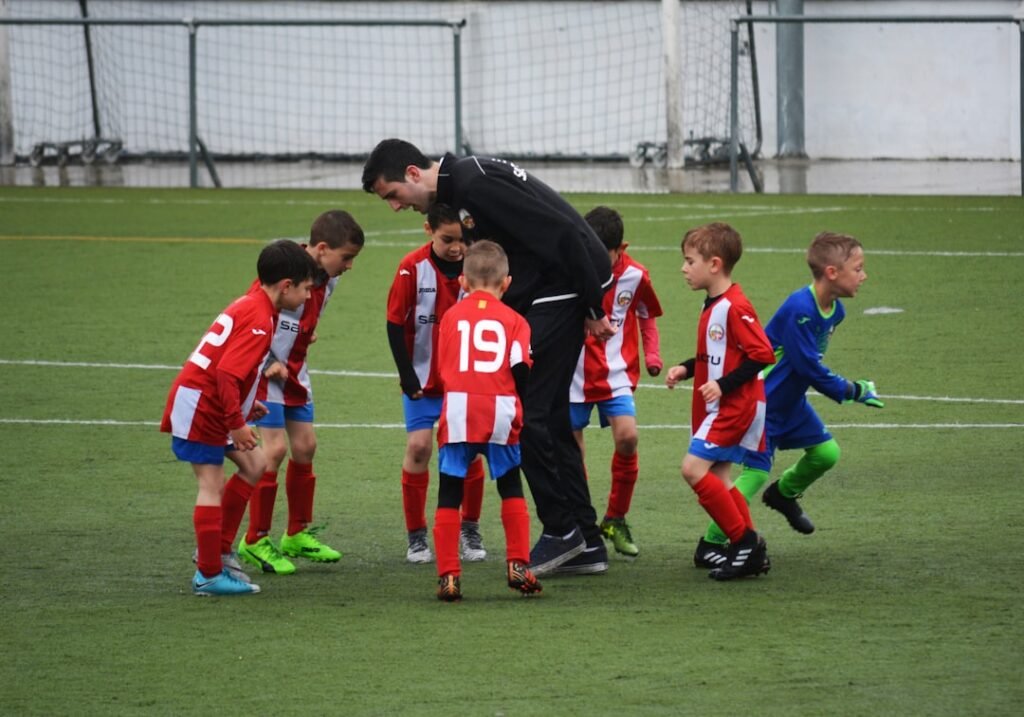
- Freeze-play exercises where coaches stop action to discuss positioning
- Video analysis sessions using actual game footage
- Tactical board demonstrations before and after training sessions
Building Progressive Understanding
Youth positioning education should follow a logical progression from simple to complex concepts. Start with basic spacing principles, then gradually introduce positional responsibilities, tactical awareness, and finally, advanced concepts like positional rotation and dynamic movement patterns.
Regular use of visual aids, including tactical demonstrations on a quality coaching board like the Vizzionboard, reinforces these concepts and helps players retain complex information. The key is consistency—using the same visual references and terminology across all coaching sessions.
Common Mistakes to Avoid
Many youth coaches rush into complex tactical concepts before establishing fundamental positioning awareness. Avoid overwhelming young players with too much information at once. Instead, focus on one or two key concepts per session and reinforce them through repetition and visual demonstration.
Another common mistake is neglecting the visual component of instruction. Young players need to see concepts illustrated clearly and repeatedly. Verbal instructions alone are rarely sufficient for this age group.
Measuring Progress and Development
Track positioning development through game observation, noting improvements in spacing, decision-making, and tactical awareness. Look for players who begin to anticipate game situations and position themselves proactively rather than reactively.
Use video analysis and tactical board sessions to show players their progress over time. This visual feedback helps reinforce positive development and identifies areas for continued improvement.
Ready to transform your youth positioning instruction? The Vizzionboard’s proportional design and zone markings make it the perfect tool for developing young players’ spatial awareness and tactical understanding. Visit vizzionboard.com to learn more about how this innovative coaching tool can enhance your player development program.