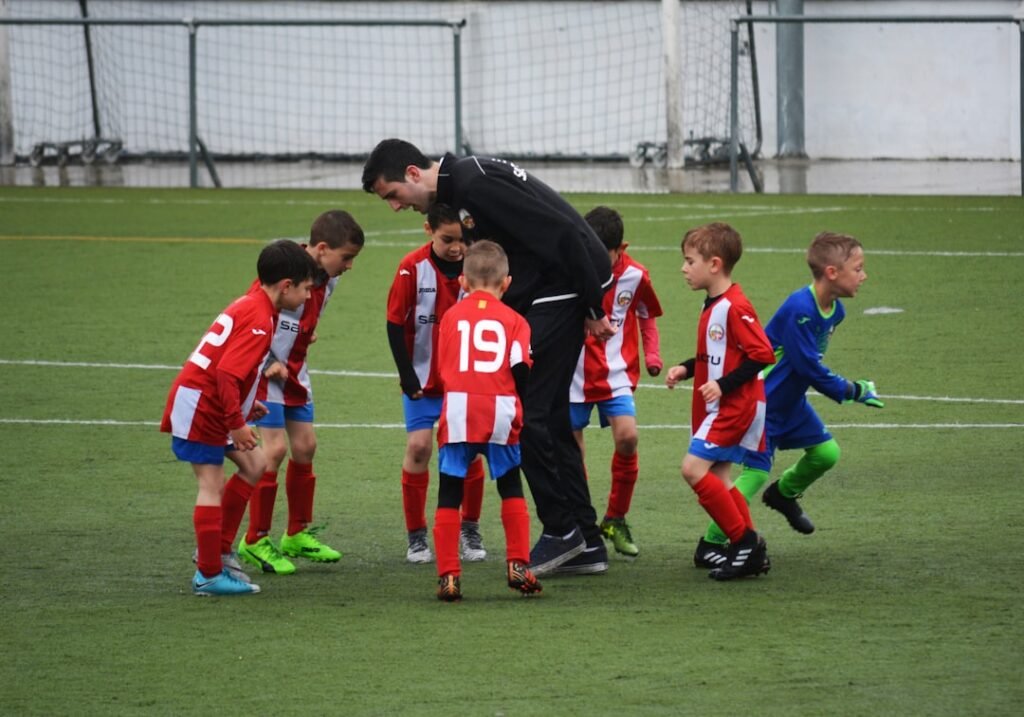
Why Visual Communication is Essential in Modern Soccer Coaching
In today’s fast-paced soccer environment, coaches need effective ways to communicate complex tactical concepts quickly and clearly. Visual communication tools have become indispensable for successful coaching at all levels, from youth academies to professional clubs. The ability to translate tactical ideas into visual representations that players can instantly understand often determines the difference between a well-organized team and one that struggles with positional awareness.
Research in sports psychology consistently shows that visual learners make up approximately 65% of the population. For soccer coaches, this means that traditional verbal instructions alone may not be sufficient to reach every player on your roster. Visual communication tools bridge this gap, providing a universal language that transcends individual learning styles and language barriers.
The Science Behind Visual Learning in Soccer
Visual communication works because it engages multiple cognitive processes simultaneously. When players see tactical formations and movement patterns illustrated on a board, they activate both their visual processing centers and spatial reasoning abilities. This dual engagement creates stronger memory formation and better retention of tactical concepts.
Studies have shown that players retain up to 90% of information when it’s presented visually, compared to only 10% when delivered through audio alone. For soccer coaches working with diverse teams, visual tools become even more critical as they help overcome language barriers and ensure every player understands their role regardless of their native language.
Essential Visual Communication Tools for Soccer Coaches
Tactical Boards: The Foundation of Visual Coaching
A high-quality tactical board remains the cornerstone of effective visual communication in soccer. Modern coaches require boards that accurately represent field proportions and include clear zone markings for tactical discussions. The Vizzionboard stands out as an innovative solution, featuring proportional dual-sided design with clearly marked horizontal thirds and central/wide/half-spaces that align with contemporary tactical analysis.
When selecting a tactical board, consider these key features:
- Proportional field representation for accurate spatial understanding
- Clear zone markings that match modern tactical terminology
- Dual-sided functionality for versatility in different scenarios
- Durable construction for regular training ground use
- Appropriate size for both individual and team presentations
Digital Integration and Modern Tools
While physical tactical boards remain essential, successful coaches increasingly integrate digital tools to enhance their visual communication arsenal. Video analysis software, tablet applications, and interactive whiteboards can supplement traditional coaching methods. However, the immediacy and tactile nature of physical boards like the Vizzionboard ensure they remain relevant in the digital age.
Implementing Visual Communication in Training Sessions
Pre-Training Tactical Briefings
Begin each training session with a brief visual presentation of the day’s tactical focus. Use your tactical board to illustrate key concepts, player movements, and positional responsibilities. This visual foundation helps players enter training with a clear mental picture of what they’ll be practicing.
In-Session Corrections and Adjustments
During training, use visual tools to make real-time corrections. Instead of lengthy verbal explanations, quickly illustrate the desired movement or positioning on your tactical board. This approach maintains training intensity while ensuring clarity of instruction.
Post-Training Analysis
Conclude sessions with visual reviews of key moments. Use your board to highlight successful executions and areas for improvement. This reinforces learning and helps players visualize their performance in tactical context.
Maximizing Impact with Zone-Based Visual Communication
Modern soccer increasingly relies on zone-based tactical systems. Effective visual communication tools must reflect this evolution by clearly delineating field zones and spaces. Boards with pre-marked zones enable coaches to discuss territorial responsibilities, pressing triggers, and positional rotations with greater precision.
The horizontal thirds concept has become fundamental to contemporary tactical discourse. Having these zones clearly marked on your tactical board eliminates confusion and ensures consistent terminology across all coaching communications.
Building a Comprehensive Visual Communication System
Successful implementation of visual communication tools requires systematic approach:
- Establish consistent visual vocabulary across your coaching staff
- Train players to interpret standard tactical symbols and movements
- Create visual libraries of your team’s set pieces and tactical variations
- Develop position-specific visual aids for different player roles
- Regular assessment of visual communication effectiveness
Measuring the Impact of Visual Communication
Track the effectiveness of your visual communication tools through player feedback, tactical execution metrics, and overall team performance indicators. Many coaches report significant improvements in player understanding and faster implementation of new tactical concepts when visual tools are properly utilized.
Ready to Transform Your Coaching Communication?
Investing in quality visual communication tools is investing in your team’s success. The right tactical board becomes an extension of your coaching philosophy, enabling clearer communication and better player understanding. Discover how Vizzionboard can enhance your coaching effectiveness with its innovative dual-sided design and professional-grade construction, starting at $59.99 for individual coaches or $47.99 each for club orders of 10 or more.