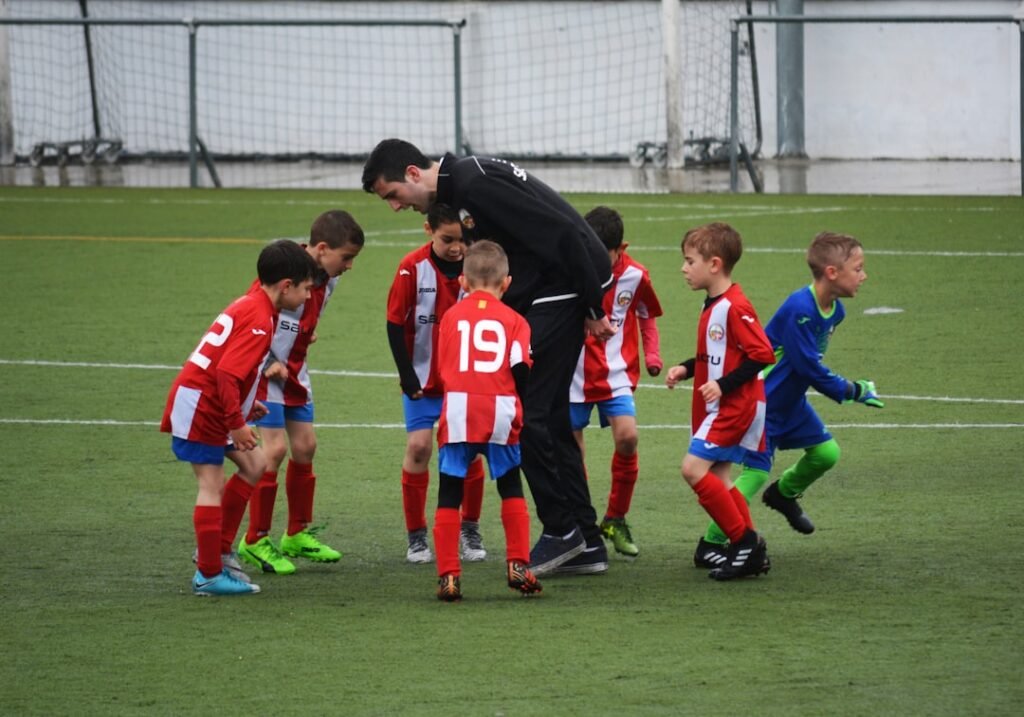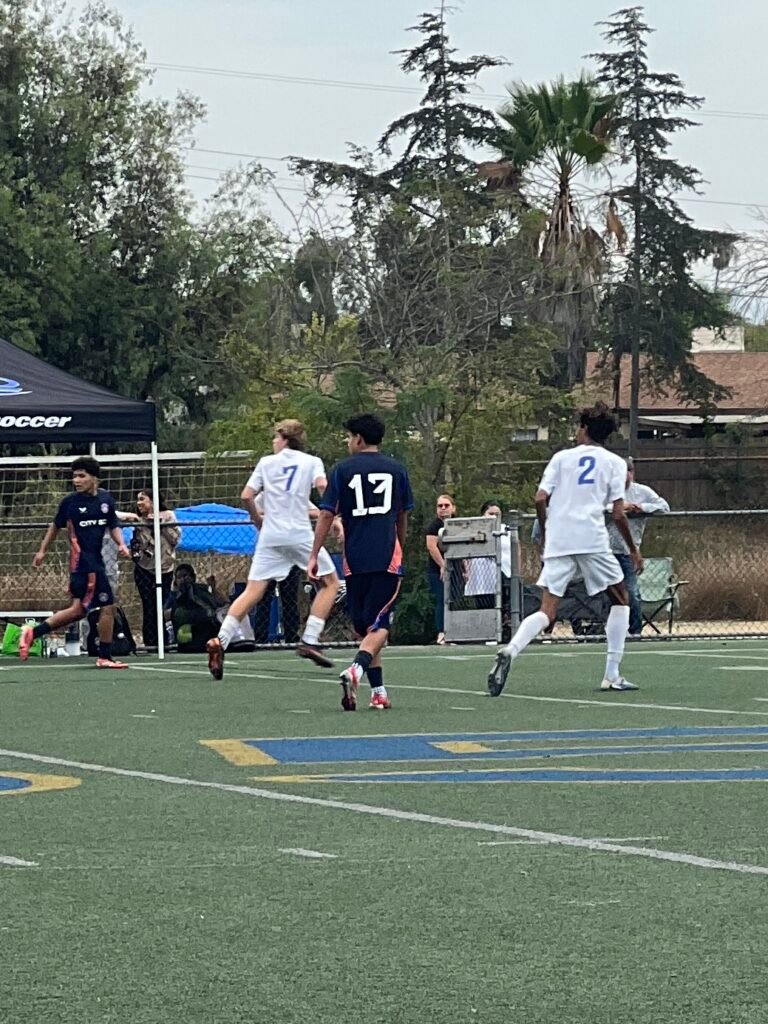
On Thursday you spend fifteen minutes walking through a corner kick routine. Your center back attacks the near post. Your center forward starts on the edge of the penalty area and arrives late at the far post. Your players nod. Then Saturday comes, you win a corner in the second half, and three of your players are standing in the same space in front of the goalkeeper while nobody is arriving at the far post. The delivery is good. There is no one there to meet it.
It is rarely an effort problem, and it usually isn’t that the players forgot. They heard the routine. Very few of them ever saw it. Set pieces are one of the few parts of the game where a coach gets to design the situation before it happens, yet most set piece routines are still taught with words and a finger pointed at an empty penalty area. Young players often struggle to retain a picture based on what is said verbally. A soccer tactics board gives them the picture, and a football tactics board built to true proportional scale lets that picture match the space they will actually be standing in on match day.
Why Coaching Soccer Set Pieces Matters More Than Ever
In close matches, a corner or a wide free kick can often be the difference between a draw and a win. Many professional clubs now give set pieces far more attention, and routines that were once an afterthought at the end of a training session are often designed, rehearsed and adjusted week to week. Youth and high school soccer tends to follow the professional game a few seasons behind, and coaching soccer set pieces is quickly becoming something club coaches are expected to do well.
The challenge is that a set piece is a picture problem more than a technique problem. Your players can usually strike a ball and head a ball. What breaks down is where each player starts, where each player arrives, and when. That is spatial information, and spatial information is very hard to hold onto from a verbal description, especially for a player who is also thinking about the player marking them.
A set piece still sits inside the same task as open play. When your team is attacking a corner, the task is to create a chance to score. When your team is defending one, the task is to prevent a chance to score. Each player in the routine has a role in service of that task, and a routine tends to work when each player can see their role in relation to their teammates’ roles.
Corner Kick Routines Fall Apart Between Training and Match Day
Think about what you are actually asking a player to hold in their head. Your center forward has to remember a starting position on the edge of the penalty area, a run that starts as the taker strikes the ball rather than before it, and an arrival point at the far post. Your center back has to remember a different starting position, a different run, and a different arrival point. On top of that, both players need to know where their teammates are going so they do not arrive in the same space.
Described out loud, that is a list. Seen on a board, it is one picture. That difference is a big part of why routines that look sharp on Thursday tend to lose their shape by Saturday. The list fades. The picture tends to stay.
This is also where proportion matters. When the penalty area on the board is drawn to true proportional scale, the distance your center forward covers from the edge of the penalty area to the far post on the board matches the distance on the pitch, so the timing you teach on the board is the timing they need on Saturday. Coaches who search for soccer tactics board proportional scale are usually after exactly this: the picture on the board is the same picture your players see when they line up for the corner.
Is It a Communication Problem or a Game Insight Problem?
Now take the version where the routine does happen. Your center forward reads the situation and makes the run, arriving at the far post exactly as planned. The ball is driven to the near post instead, and the defender there clears it. Many coaches correct the runner, because the run is the visible thing. But the runner did nothing wrong. They made the decision to run, and it was the right one. The problem that needs to be solved lies with the taker.
So is it a communication problem or a game insight problem? If the taker placed the ball and started the run-up without ever looking up at where the runners started, that is a communication problem. The taker could not play a pass to a run they never saw. Set pieces lean heavily on communication, and it is often visible: the taker’s raised arm that signals which routine is on is a shared language your players use to tell each other what is about to happen. If that signal is not clear, the runners and the taker can end up working from different pictures.
If the taker saw the far post run and chose the near post anyway, that is a game insight problem, and it may not be a problem at all. Perhaps the far post run was picked up by a defender and the near post was the better decision. Choosing a different teammate is not automatically an error. What matters is that it was a decision, and that you coach the taker on how that decision was made rather than coaching the runner, whose decision to make the run was the right one. Correcting a player for the right decision tends to make them hesitate on the next one.
How the Back Side Becomes a Set Piece Tactics Board
Vizzionboard is a dual sided soccer tactics board. The front side is a full 11v11 pitch, and the back side is a half-pitch, where set pieces come to life. On the back side, the whole penalty area fits at true proportional scale, so the starting positions, the runs, and the arrival points all sit in the same proportion they have on a real pitch. It is the natural set piece tactics board for a coach who wants the picture to match the match.
Both sides are magnetic and dry-erase, which is what makes the back side work so well as a soccer set piece board. Place however many magnets match the players you actually commit to the penalty area, set them in their starting positions, and draw each run with the dry-erase marker. When you want to show a variation, the magnets hold the starting positions while you wipe the drawn runs and redraw the new ones. Players see that the starting picture is identical and only the runs change, which is how a well-designed set of corner kick routines tends to look to the players inside them.
The same applies when you are defending set pieces. Use the numbered magnets for both teams, place magnets where the opposition players are likely to start, and show which of your players are defending a space and which are marking a player. When an opposition player makes a late run, you can slide that one magnet and ask your players which of them picks the runner up. That is a soccer tactics board with magnets doing what it is for: magnets that hold position while you talk, and are small enough that the space around them stays visible. Magnets that slide off easily or are too big to see space on the board defeat the purpose.
Coaching tip: after a set piece breaks down in a match, reset the magnets to where your players actually stood when the ball was struck, not where the routine said they should be. Then ask the taker one question: from there, which runs were in your picture? Let the taker answer before you say anything. The answer usually tells you whether you are looking at a communication problem or a game insight problem, and it keeps the focus off the runner who made the right decision.
The board is never a replacement for the work that needs to be done out on the field. The board recreates situational moments that can be displayed to give that same picture to players. The picture is what they take with them out on the pitch.
Scaling Set Pieces Down to 7v7 and 9v9
If you coach younger players, the idea is the same but the language needs to be simpler. In 7v7 and 9v9 there are fewer players to organize, so a corner kick routine might involve only two or three roles. Talk about starting positions and arrival points in plain terms: near post, far post, edge of the penalty area. Tell them where they start and where they arrive, and let the board show them the rest. Save more detailed ideas, like one player screening a defender so a teammate can arrive free, for 11v11, where there are enough players in the penalty area for those ideas to matter.
What does not change is the picture. Even with two magnets and two drawn runs, a younger player who sees where they start and where they arrive tends to hold onto the routine far longer than one who only heard it.
What Collegiate, High School, and Club Coaches Use It For
If you have been searching for the best soccer tactics board for coaches who take set pieces seriously, the question worth asking is which board lets your players see the routine at the same proportions as the pitch they play on. Vizzionboard is used by collegiate, high school, and club coaches, and set pieces are a natural place to put it to work. A coach can walk through an attacking corner on the back side, then turn the board over to the front side to show where the players who stay out of the penalty area position across the full pitch.
For a club director, the value compounds. When every team in the club uses the same board and the same picture of the penalty area, set piece coaching becomes consistent across age groups instead of depending on which coach a player happened to have that season. That is what the club pricing is built for, with boards from $47.99 each for orders of ten or more. It is also soccer club coaching equipment that travels well: each board comes with 23 numbered positional magnets covering both teams, a dry-erase marker and eraser, and a protective carry bag.
It is why the slogan is Built to Develop Champions. Not because a board wins set pieces on its own, but because players who can see their role in the routine tend to arrive in the right space more often than players who are trying to remember a list.
Put the Routine in Front of Your Players
Your next corner kick is coming, and so is the next one your team has to defend. Give your players the picture before the whistle, not after the goal. Vizzionboard is $59.99, with both sides magnetic and dry-erase and the whole penalty area on the back side at true proportional scale. Get your Vizzionboard at the shop and start coaching set pieces your players can see.
Built to Develop Champions.