The opposition center back steps up to press. As soon as they do, space behind the opposition back line is available, and the players in a position to exploit it are the ones positioned on the attacking front line. Your left winger is one of them. They read the situation and make the run.
The pass never comes. The player in possession still has their head down, the center back recovers the ground they gave up, and by the time that player looks up the space behind that back line is gone.
Nothing in that run needed fixing. The winger recognized the team intention and made the run. The problem that needs to be solved lies with the player in possession. Is it a communication/game tactical principle problem, or is it a game insight problem?
Either that player never saw the run, or they saw it and made a decision to play to another teammate in a different position. Those are not the same problems and they don’t have the same solutions, which is one of the harder problems in youth soccer player development to diagnose. It is also something a soccer tactics board is genuinely good at solving, because a coach can recreate the visual of the situation on the board and help the player see the picture instead of trying to describe it to them.
Three Stages, and Three Ways the Space Goes Unused
A player positioned on the attacking front line has more than one space available to them. Depending on what the team is trying to do, they might exploit the space behind the opposition back line, or move into a position to exploit the space behind the opposition midfield line, or come in to exploit the space behind the opposition front line.
Whichever of those spaces it is, the run into it moves through three stages, always in the same order. The player communicates first, reading the situation in front of them and signalling their intent to their teammates. A decision follows from what that reading gave them, and then that decision is executed, which is where the football technique principles come in. A breakdown at any one of the three produces the same thing on Saturday — a run that does not end in a pass — and the work for a coach is identifying which stage it was.
The first stage is where scanning does its work. It tells a player whether that space is available right now and where the defender is. What it does not tell them is whether that space will still be available when the ball arrives, because that part does not depend on them alone. It depends on the player in possession having control, having their head up, and on the defender who vacated the space not having recovered it yet.
A run that starts too early breaks down in one of the runner’s first two stages. Either the runner never read that the player in possession was not yet able to play the ball, which is a communication problem, or they read it correctly and went anyway, which is a game insight problem in the moment they chose to go. Going before the pass can be played only tells the opposition what is coming. The player goes, the back line reads the run and drops, and the space behind them is no longer available. The intention was right and the run removed the space it was aimed at.
A run that arrives too late is the one most often mistaken for a lack of effort. Sometimes the decision came late. Just as often the reading and the decision were both right and the body could not carry the decision out — the first step was slow, the player was not set to accelerate — and that is execution rather than reading or deciding. Either way the space behind the opposition back line was available and went unused, and the ball has to go somewhere else — usually into the next team intention down, exploiting the space behind the opposition midfield line.
The third is not the runner’s at all. The winger read the center back stepping up, decided to go, and executed the run. The ball still never came. Nothing in those three stages needs correcting, so the problem sits with the player in possession, at the first stage or the second.
Two Problems That Look Identical From the Touchline
From thirty yards away, a player who never saw the run and a player who saw it and played elsewhere look exactly the same. Execution does not come into it, because no pass was attempted, so the player in possession is at either the first stage or the second. Those need different solutions, and correcting the wrong one can do more harm than saying nothing.
The first is a communication problem, and it is usually settled before the ball arrives. A player who receives with their back to the game, shoulders square to their own goal, cannot see the run at all, however well the winger timed it. What players are asked for is simple to say and difficult to do: receive as open as possible, and only as closed as necessary. Open means the run can be read. Closed means it cannot — when it started, where it is going, and how fast it is arriving all become guesswork, because the position the player received in never gave them the picture to read from.
The run itself is a message. A player committing to the space behind the opposition back line is telling the player in possession what they intend to do, and a message only arrives if the other player is positioned to receive it. The space a player has when the ball reaches them is the time they have to make the next decision.
The second is a game insight problem, and it belongs to a player who did see the run. They were open, the picture was there, and the ball went to a teammate in a different position. That may well have been the right decision. Playing as directly toward the opposing goal as possible still leaves room for as indirectly as necessary, and playing as early as possible still leaves room for as late as necessary. The point is that it was a decision and not a failure to see, and it has to be coached as one.
Both end the same way, with the space closing before it is exploited. The solution sits in a different place each time, and guessing which one it was in the two seconds after it happens is how a player ends up working on the wrong thing.
Why a Soccer Coach Board Shows Which Problem You Have
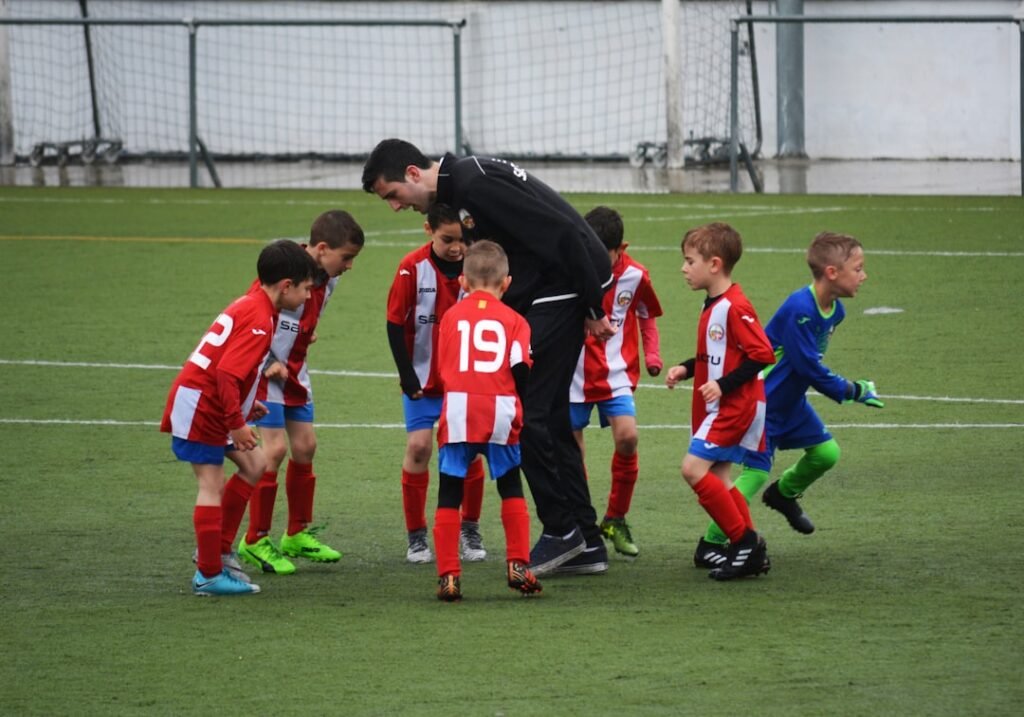
The instinct is to coach this from the touchline, as it happens. By the time a coach has seen the run start, judged it, and shouted, the phase has moved on and the player has something else in front of them. The words arrive after the moment they describe. It is also when a coach is most likely to correct whichever player is easiest to see rather than the one who needed it.
There is a deeper version of the same problem. A player asked to build a picture out of words alone, usually while still catching their breath, is being asked for something difficult. Younger players in particular will not retain a picture that only ever existed verbally. By the third sentence, the image the coach was describing has gone.
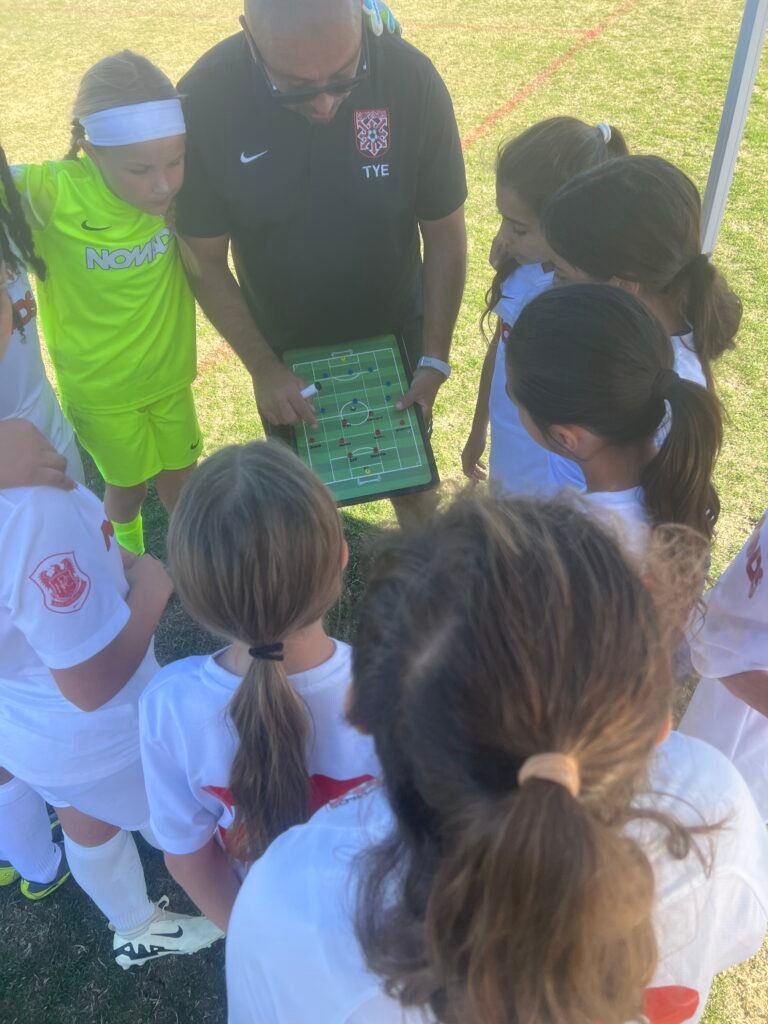
A board solves that, because a coach can recreate the visual of the situation rather than describe it. Set the opposition back line, position your own players on the attacking front line where they actually were, and place the player in possession facing the way they were actually facing. Then ask the one question that separates the two problems: did you see the run? If the answer is no, the solution is probably a communication problem. If they answer yes, it could be a game insight problem. Same situation, same two players, two different sessions.
That is the practical case for a soccer tactics board with magnets. The magnets have to hold their position, because as soon as one slides, the picture on the board stops being the one you set, and the line of sight you are asking the player about is no longer the one they actually had. They also have to be small enough that the space around them stays visible — a magnet that covers the space it is standing in defeats the point of drawing that space at all. The pitch has to be drawn to soccer tactics board proportional scale, because the distance between the opposition back line and their goalkeeper is what decides whether the space behind that line is worth exploiting. Draw that space generously and the run that looks well timed on the board is early on Saturday.
The Vizzionboard front side is a full 11v11 pitch at true proportional scale, with 23 numbered positional magnets covering both teams, so the opposition back line, the winger, and the player in possession can all be positioned on the board at the same time. Both sides are magnetic and dry-erase, which is what makes the communication question answerable: the magnets hold everyone in position while the line of sight from the player in possession gets drawn in, wiped, and drawn again from a more open body position. You can see the full setup in the shop.
The Same Timing on Set Pieces, Using the Half-Pitch Side
Set pieces make this easier to coach, because the positions everyone starts from are known in advance and the moment can be agreed on beforehand. Much less of the communication has to happen live, because both players already know where the other will be. A far-post run on a corner still depends on the same kind of moment as a run in behind from open play. Go too early or too late and the defender responsible for that space has adjusted before the ball is struck.
Because this is a dual sided soccer tactics board, the back side is a half-pitch and a full penalty area fits at true scale. Every attacker’s starting position and every defender’s sits on the board at once, held there by the magnets, while the runs get drawn and wiped for a second and third variation. Set piece routines reward that kind of rehearsal, and defending them rewards it for the same reason from the other side of the ball.
Scaling the Idea Down to 7v7 and 9v9
Everything above is 11v11 language. A 9v9 or 7v7 group is working on the same idea — a defender steps up to press, space becomes available behind them, and the run and the pass have to happen at the same moment — but asking them to read which way a defender is leaning or disguise the start of a run is asking for something they do not yet have the reference points to give. Phrases like timing a run into the half-space belong with older players.
The same diagnosis works at those ages in its plainest form. Ask the player in possession whether they could see their teammate, and if they say yes, ask why the ball went the other way. Getting them to receive side-on, so more of the field is in front of them, keeps the work at the communication stage, which is usually where it belongs at that age. A player who cannot see the run has nothing to decide from. Format does not change the diagnosis. It changes the vocabulary and how many magnets belong on the board at one time.
What This Looks Like Across a Whole Club
The diagnosis works better still when every coach in a club runs it the same way. If the under-11 coach is asking the simple version and the under-16 coach is working through the same situation in more detail, a player moving up meets something familiar rather than starting again with someone else’s vocabulary. That is difficult to hold together when every coach works from their own explanation style, and easier when they are all working from the same visual reference. Clubs outfitting a full staff with Vizzionboard can find bulk options on the club pricing page, which is usually where a technical director’s conversation starts.
None of this requires complicated equipment. It requires something accurate, durable enough for a bag that gets opened two or three times a week, and simple enough that a coach reaches for it before a session rather than leaving it in the car. That is the standard behind the player development tools soccer coaches keep in rotation, and it is why the slogan is Built to Develop Champions — not because a board wins matches on its own, but because two players who see the same picture tend to arrive at the same moment.
Coach the Problem, Not the Player You Can See
If your players are being told to scan more and the chances are still not arriving, more scanning is unlikely to be the solution. They can already see the space, and they usually know which team intention they are working to. What has not been shown to them is the moment that space becomes available, the moment it is gone, and which of the two problems the player in possession actually had — whether they never saw the run, or saw it and played to a teammate in a different position. Most players need to watch that happen slowly before they can recognize it at full speed. Take a look at the Vizzionboard tactics board and walk one run through, one touch at a time, this week. Built to Develop Champions.